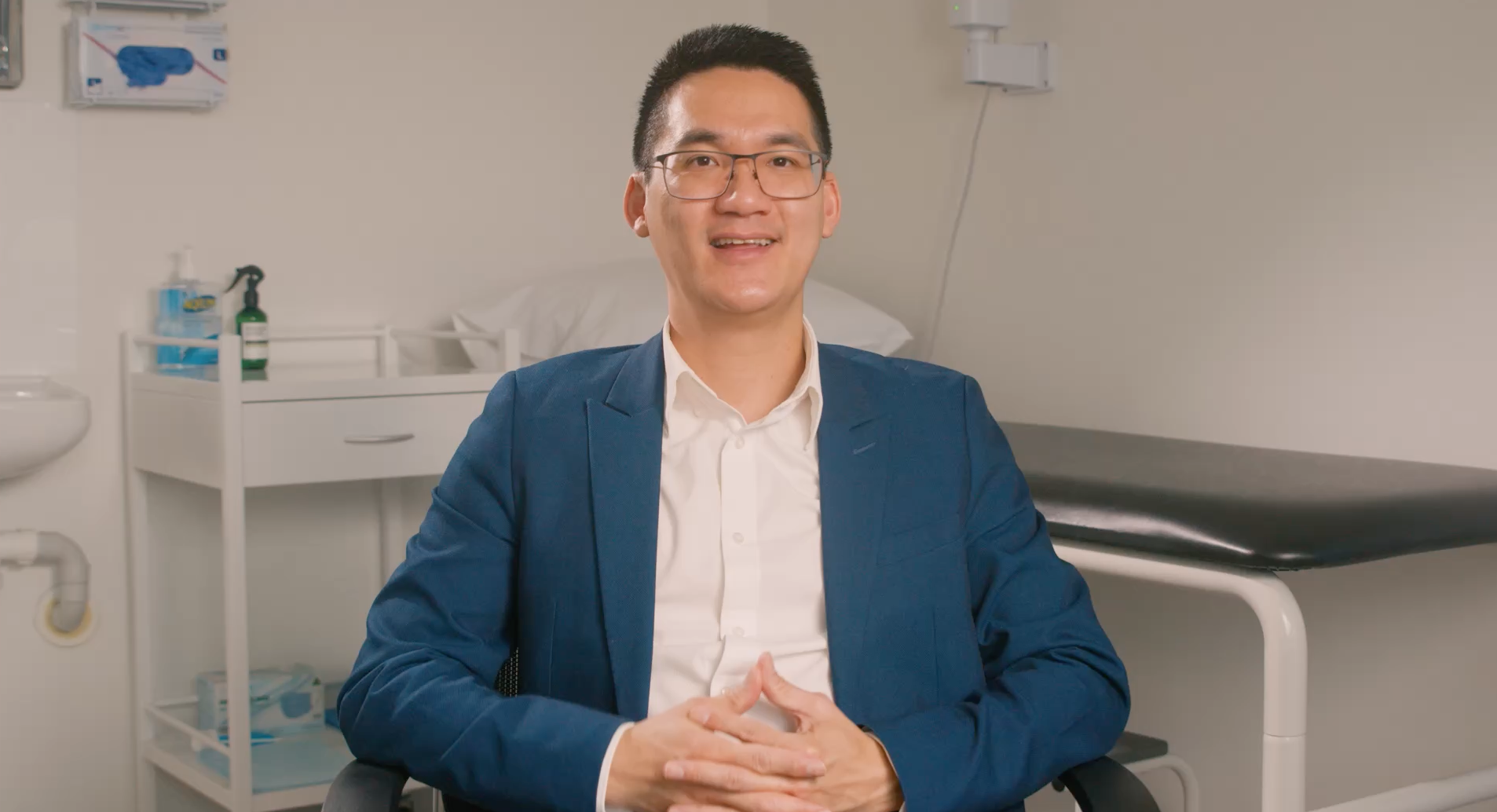
Why early detection is critical for bowel cancer
Bowel cancer usually takes years to develop, which is why early detection works.
In Australia, routine screening often starts with a bowel screening test. If this test comes back positive, or if you're at higher risk because you've had polyps before or there's a family history of bowel cancer, a colonoscopy may be recommended.
A colonoscopy lets us examine the colon, or large bowel, and remove polyps before they can turn into cancer.
In my practice, the biggest barrier isn't the procedure itself; it's usually the bowel preparation.
But that's changing. We now have low-volume solutions and split-dose schedules that make bowel preparation easier and more tolerable.
Tailoring the preparation to each patient also improves adherence and can help save lives.
Once you're on the table, the focus shifts to detection.
Not all colonoscopies are equal. We measure quality using the adenoma detection rate, or ADR.
Think of it like a doctor's batting average.
Research has shown that every 1% increase in ADR is associated with around a 3% reduction in the risk of interval bowel cancer.
High-definition scopes and careful, thorough examination techniques help us spot more polyps.
AI can also highlight subtle areas that might otherwise be easy to miss.
A good colonoscopy depends on both preparation and technique.
With the right preparation and a careful procedure, we can detect polyps early and help prevent bowel cancer.
So, if you've been putting off your screening or follow-up, now is the time.
Preparation is easier, technology is smarter, and your health is worth it.
Additional videos on a range of common conditions are available to view on the Gastroenterology Specialist Care YouTube channel.
Note, this video is not a medical consultation. Any medical information is general in nature and is not intended to provide individual clinical advice. You should contact your doctor or other healthcare professional in relation to any concerns they may have, as your own circumstances may be different.
More videos on common conditions you may be interested in: